
What happens to casework in an election year?
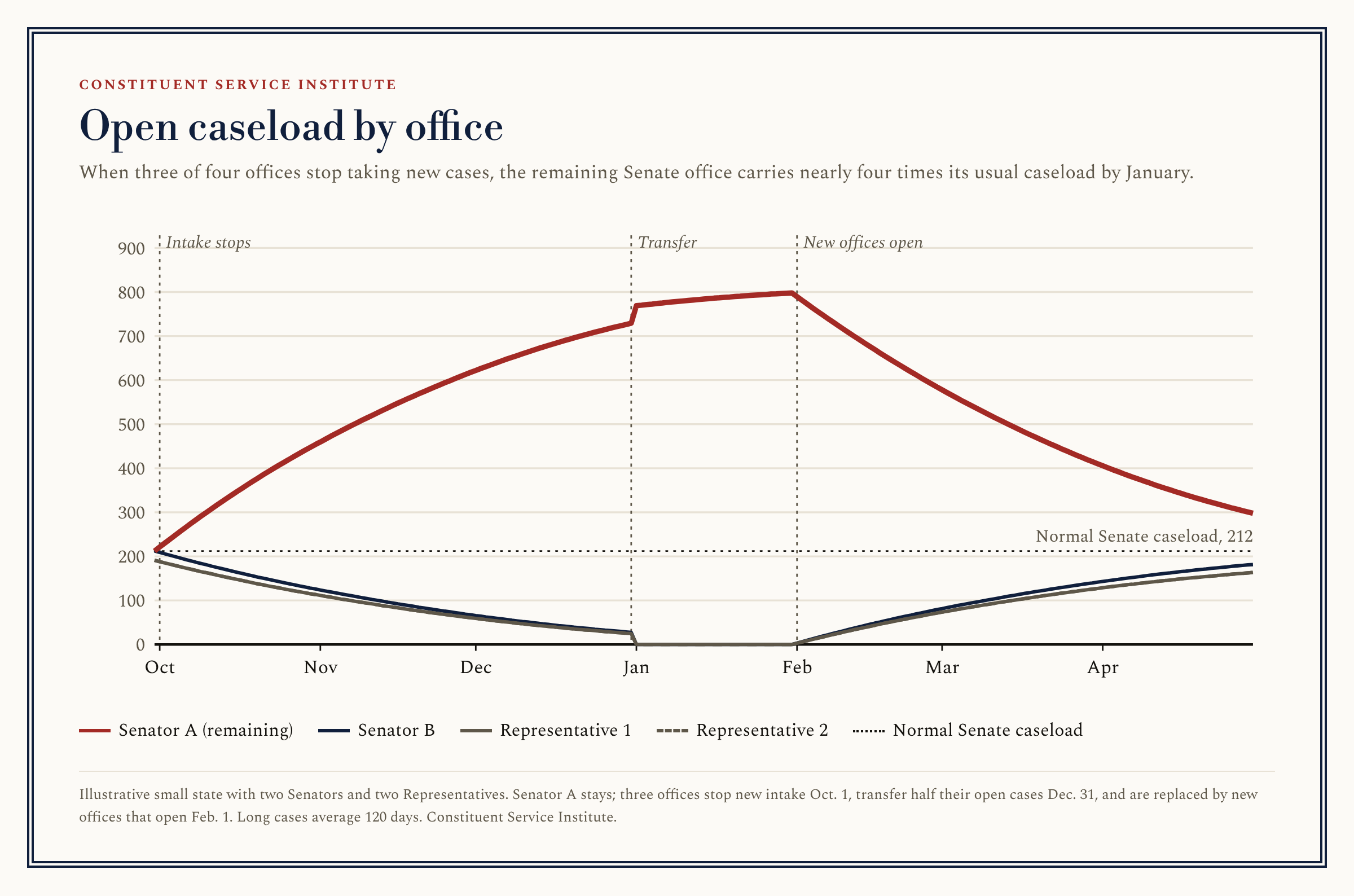
Month-by-month breakdown of caseloads for a hypothetical state delegation with 75% turnover
When I’m explaining casework to people who are hearing about it for the first time, one of the first things I harp on to death is that there is a strict, bright line between what happens on the campaign side of a Congressional office and what happens on the elected side. Official resources, including staff time, can’t be used for campaign work, and casework is as official as it gets. Caseworkers help constituents regardless of how they vote, and they’re kept well away from the reelection effort.
The problem, though, is that the two really are inextricable, and they affect each other in unavoidable ways.
An election decides whether a casework team will keep their jobs in January. Casework responsiveness is a huge part of the value proposition for many candidates — or, conversely, a weak operation is an effective vulnerability that a smart challenger can exploit. Elections are the accountability mechanism for the whole of a Representative’s work, including how they manage their casework team — and they’re also a huge operational challenge for offices having to figure out how to do casework through the uncertainty of an election.
As we head into the home stretch of the 2026 midterms, casework teams across the country are already planning and preparing for transitions. Today, we’re going to talk through what happens to casework in an election year, how the burden of transition is unevenly spread across offices, and how all of that is changing my mind on the right approach to institutional support for casework.
It’s math time.